
Why data-driven golf coaching is replacing guesswork in 2026

Golf has always been described as a game of feel, but the way golfers improve is changing fast. Over the last few years, and especially heading into 2026, there has been a clear shift away from trial-and-error practice and towards data-driven improvement. More golfers are actively searching for better golf lessons, smarter practice environments, and clearer explanations for why their shots behave the way they do. This shift is one of the main reasons indoor golf simulators and technology-led coaching now sit at the heart of modern golf development.
For decades, most golfers practised on traditional driving ranges, hitting ball after ball with little understanding of what was actually happening at impact. A good shot felt good, a bad shot felt bad, and improvement relied heavily on timing and guesswork. The issue with this approach is that it often reinforces poor habits without the golfer realising. It is entirely possible to hit a shot that looks acceptable while still delivering the club inefficiently, which leads to inconsistency that becomes harder to correct over time.
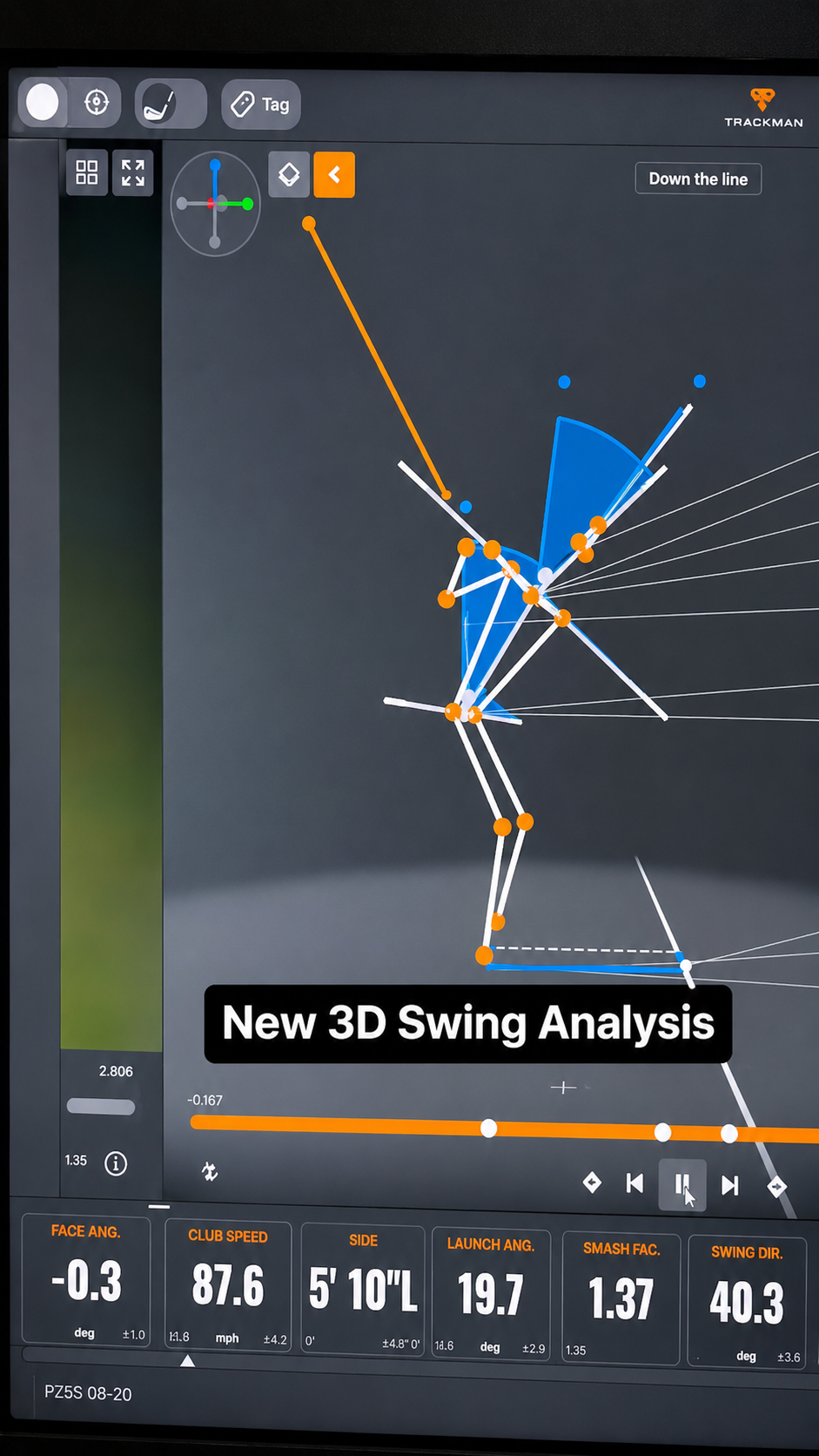
Modern golf lessons look very different. With indoor golf simulators, coaches and players can see exactly what the club and ball are doing on every swing. Launch angle, spin rate, club path, face angle and strike location are no longer hidden variables. This level of visibility removes much of the confusion from practice. Instead of searching endlessly for answers, golfers can focus on the specific changes that will have the biggest impact on their performance.
Efficiency is one of the biggest reasons this approach has become so popular. Golfers today are busier, more informed, and far less patient with vague instruction. They want to understand why something is happening and how to fix it in a structured, logical way. Data-driven coaching removes ambiguity. When a golfer can clearly see that their club face is consistently open or that impact is drifting low on the face, the solution becomes far more obvious. This leads to faster improvement and significantly less frustration.
Indoor golf simulators also address one of the biggest challenges for golfers in the UK: weather. The ability to practise year-round in a controlled indoor environment allows golfers to maintain momentum rather than losing progress over the winter months. This is particularly important for newer players, where long breaks can undo weeks of hard work. Consistency is one of the most important factors in improvement, and indoor practice makes that consistency possible regardless of conditions outside.
Another reason this trend is accelerating is the ability to track progress over time. Instead of relying on memory or feel alone, golfers can see measurable improvements in their swing and ball flight. This feedback loop builds confidence. When a player knows a change is working, it becomes much easier to trust it on the course. This is one of the key differences between modern golf lessons and traditional approaches that rely purely on observation.
There is still a misconception that technology-based coaching is only for elite or low-handicap players. In reality, beginners often benefit the most. Clear, immediate feedback helps new golfers understand cause and effect early in their development, preventing poor habits from becoming ingrained. Rather than copying positions or chasing swing thoughts, they learn how their own swing produces results and how to improve it logically.
As more golfers search online for indoor golf simulators and modern golf lessons, this shift is only going to accelerate. Players want smarter practice, clearer answers, and environments that help them improve efficiently. Data-driven coaching is not a passing trend. It is quickly becoming the standard.
For golfers who want to improve without guesswork, the combination of professional coaching and indoor simulator technology offers a far clearer pathway forward. The future of golf improvement is not about hitting more balls. It is about understanding your swing, practising with purpose, and making informed changes that last.


Comments