
Happy New Year 2026: How to Actually Improve Your Golf This Year

If you are reading this in early January, there is a decent chance you have made at least one well-intentioned promise to yourself. It might be “I’m going to play more golf,” “I’m going to practise properly,” or the classic, “This is the year I finally get the handicap down.”
And then, without fail, life gets busy, the weather turns, the range gets repetitive, and by March you are back to the familiar routine: turning up, whacking a bucket of balls, feeling vaguely optimistic for ten minutes, then wondering why nothing has really changed.
So, let’s do something different in 2026.
This is not about swinging harder, buying a new driver, or watching fifteen conflicting tips on social media the night before your Saturday medal. This is about building real, sustainable improvement through two things that consistently move the needle for golfers at every level: structured coaching that produces measurable change, and practice that has purpose, feedback, and accountability.
If you get those two right, your golf does not just improve for a week, it improves for the year.
Why “More Practice” Usually Does Not Work
Most golfers are not short on effort. They are short on clarity.
The traditional driving range routine looks productive on the surface. You buy a bucket, pull out the driver because it is fun, hit a few that feel great, hit a few that definitely do not, and then you go home with a pleasant sense that you have “put the work in.”
The problem is that the range does not always tell you the truth.
You can stripe one down the middle and still be reinforcing the same move that causes your big miss on the course. You can “feel” like you are doing something different and, in reality, be doing the exact same thing. You can even improve your ball-striking slightly but never address the real scoring issues, like start line control, dispersion, distance gaps, and pressure patterns that show up on the first tee when your mates are watching.
Range practice becomes a loop: effort goes in, feedback is vague, progress is hard to measure, and motivation fades.
It is not your fault. It is the system
The Shift That Changes Everything: Practice With Feedback, Not Hope
The fastest way to improve is to shorten the time between action and accurate feedback.
That is why launch monitor practice, when used properly, is a game-changer. Not because data is “cool,” but because it removes guesswork.
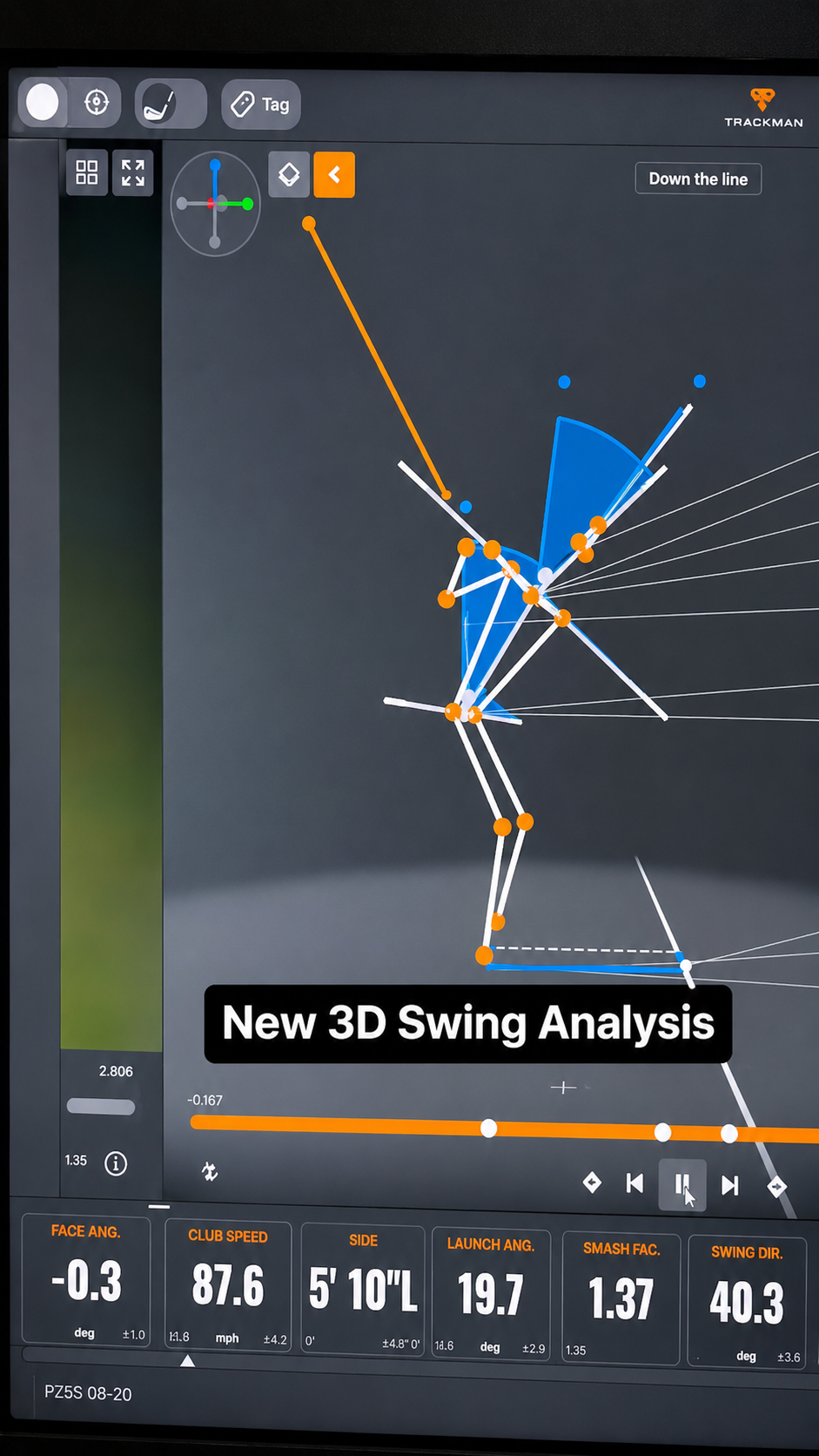
At an indoor TrackMan facility like My Golf Matters in Wokingham, your practice is not based on whether a shot looked decent. It is based on what actually happened. You know if the ball started right because of face angle or swing path. You know if your strike quality is consistent or just occasionally lucky. You know whether your “high draw” is a reliable pattern or something you only see once every twelve balls. You see your carry distances, your dispersion, and your trends.
Most importantly, you can practise one change at a time and immediately see whether it is working. That is the difference between practising and simply hitting balls.
Where Golf Lessons Fit In \ Why Not All Lessons Are Equal
A lot of golfers have tried lessons. Some had a great experience. Some left feeling confused, overloaded, or temporarily better until the next round exposed the cracks.
Here is the honest truth: coaching only works when it is structured, personalised, and connected to outcomes.
You do not need a lesson that gives you six swing thoughts and a handshake. You need a plan that identifies what is holding you back, prioritises what matters most for your game, and tracks whether your changes are sticking.
Proper coaching should answer questions like these:
What is your biggest leak right now, and is it a swing issue or a strategy issue?
What is the one change that will improve your scoring the fastest?
What does “good” look like for your swing, not someone else’s?
How do you practise between sessions so you do not just “reset” every week?
When coaching is paired with launch monitor practice, something powerful happens. The lesson gives you direction, and the practice gives you proof. You are not relying on memory, feel, or guesswork. You can validate improvements, catch old habits early, and build confidence because you have evidence that your pattern is changing.
That is how improvement becomes sustainable.
Setting Golf Goals for 2026 That You Will Actually Keep
Most goals fail because they are vague. “Get better” is not a plan. “Practise more” is not a plan either, unless it comes with structure.
A better way to think about goals is in layers. Start with the outcome you want, then work backwards into the behaviours that create it.
If your goal is “drop my handicap,” what does that require? Better strike consistency? Better wedge distance control? Fewer penalty shots? Improved driver dispersion? More confident putting inside eight feet?
If your goal is “break 80” or “break 90,” what is currently costing you strokes? It is rarely one dramatic thing. It is usually repeatable patterns, like missed greens from poor distance control, three-putts from weak pace, or one tee shot per round that puts you in the trees and turns a good hole into damage limitation.
At My Golf Matters, we see it all the time: golfers who are not far away from their target score, they just need a more reliable process, and they need their practice to match the reality of scoring golf.
When you set goals for 2026, keep them practical and measurable. Not in an obsessive way, but in a way that makes progress obvious. The easier it is to see progress, the easier it is to stay consistent.
The Driving Range Versus Indoor TrackMan Practice: The Real Difference
This is not about saying the driving range is “bad.” It can be helpful. But for many golfers, it becomes a comfort zone. You can hide in volume and call it commitment.
Indoor TrackMan practice changes the mindset because it naturally pushes you towards intention. When you can see your numbers and patterns, it becomes harder to tell yourself stories like “That’s basically fine,” when your dispersion says otherwise.
Instead of hitting fifty 7-irons because you feel like it, you can work through a purposeful session that mirrors performance. You can practise targets, pressure, and consistency. You can build a “stock shot” that holds up on the course, not just on a mat.
You also remove variables that waste time. No wind guessing. No wet range balls. No wondering why the shot felt great but flew ten yards short. You can actually compare sessions and see long-term trends. That consistency is a big part of how golfers improve across months, not minutes.
Accountability: The Missing Ingredient for Most Golfers
The best plan in the world does not work if it lives in your head for three days and disappears the moment the next busy week arrives.
Accountability is not about being told off. It is about having enough structure around your golf that you keep moving forward even when motivation dips.
When your coaching is linked to tracked practice, you gain a simple kind of accountability: the results show up, either way.
If you have improved your face control, it shows. If your strike is more consistent, it shows. If your dispersion has tightened, it shows. If you are slipping back into old habits, it shows early, before it leaks into your on-course confidence.
That feedback loop is what most golfers never get with traditional, unstructured range sessions. And it is why so many well-meaning “new year golf goals” quietly fade out by February.
What This Looks Like in Real Life
A realistic 2026 improvement path is not complicated. It is simply disciplined.
You start with a proper assessment, ideally with a PGA qualified coach who can quickly identify what matters most for your game. You set a clear plan. You practise with feedback so you know you are doing the right work. You measure progress over time, not based on one good range session. You adjust as your game changes, and you stay consistent through the year.
It's not glamorous. It is effective. And if you are the kind of golfer who has been “meaning to sort it out” for years, 2026 is the perfect time to finally do it properly.
A Quick Word on Local Golfers Around Wokingham
If you are based in Wokingham or nearby in Reading, Bracknell, Ascot, Camberley, Farnham, Basingstoke, Crowthorne, Finchampstead, Winnersh, Twyford, Henley, Maidenhead, or anywhere across Berkshire, Surrey and Hampshire within an easy drive, the advantage of an indoor performance facility is that you can keep improving regardless of weather and daylight.
January is not usually the month golfers associate with progress. But it is one of the best months to lay foundations, especially when your practice is structured and measurable.
Your 2026 Call to Action
If you want 2026 to be the year your golf genuinely moves forward, not just the year you buy a new glove and tell yourself the swing feels “better,” then take the first step and get a plan.
My Golf Matters in Wokingham is built for golfers who want real improvement through expert coaching and purposeful practice, backed by TrackMan launch monitor technology and detailed feedback.
We also have a proven track record with over 500 five-star Google reviews at the time of writing, which reflects what matters most: golfers leaving with clear progress they can take to the course.
If you are ready to train with intent in 2026, get in touch with My Golf Matters and book a lesson or a TrackMan practice session. Start the year properly, and give yourself the best chance of making this your most improved season yet!


Comments