
Understanding Driver Lessons: Fixing Slice, Height & Distance Issues

Driver lessons are often the turning point for golfers who feel stuck, frustrated, or nervous on the tee. The driver is the longest club in the bag, the one swung at the highest speed, and for many golfers it’s also the most unpredictable. When it’s working, the game feels easy. When it’s not, it can unravel a round before it’s really begun.
We see a huge number of golfers come through our doors who all share a similar story. They’re losing balls off the tee, struggling with a slice or weak fade, or feeling like they simply don’t hit the driver far enough compared to their playing partners. In many cases, the issue isn’t effort or commitment. It’s misunderstanding what actually controls ball flight.
One of the most common problems golfers face with the driver is the slice. It’s often labelled as a swing path issue, or blamed on an open clubface, but the reality is that those are outcomes, not causes. A slice can be influenced by grip, wrist angles, face-to-path relationship, attack angle, strike location, or sequencing. Trying to fix it without knowing which factor is responsible is where most golfers go wrong.
Distance is another major frustration. Many golfers assume they need to swing harder, use a stiffer shaft, or change their equipment entirely. In reality, poor strike quality, inefficient launch conditions, or an attack angle that works against the clubhead are far more common reasons for lost distance. Swinging faster with poor mechanics usually just exaggerates the problem.
Height with the driver is another misunderstood area. Golfers often believe they need to help the ball into the air, leaning back or trying to scoop it up. This typically leads to inconsistent contact, low strikes on the face, or excessive spin. The height of a driver shot is dictated by dynamic loft, strike location, and attack angle, not by trying to lift the ball manually.
One of the biggest misconceptions we see is the belief that there’s a universal fix for driver problems. Many golfers have spent hours scrolling through YouTube videos looking for quick fixes. “Just do this drill.” “Change this one move.” “This will fix your slice in five minutes.” While some of these tips may be well intentioned, they often lack context. What works for one golfer can actively make another golfer’s swing worse.
This is where confusion starts to build. Golfers layer fix on top of fix, change grip one week, stance the next, swing path the next, and end up with a swing full of compensations. The result is usually more inconsistency, more frustration, and a complete loss of trust over the ball.
The difference with a properly structured driver lesson is clarity. When you understand what the club is actually doing through impact and why the ball is behaving the way it is, the noise disappears. You stop guessing. You stop chasing fixes. Instead, you make targeted adjustments based on facts, not feelings.
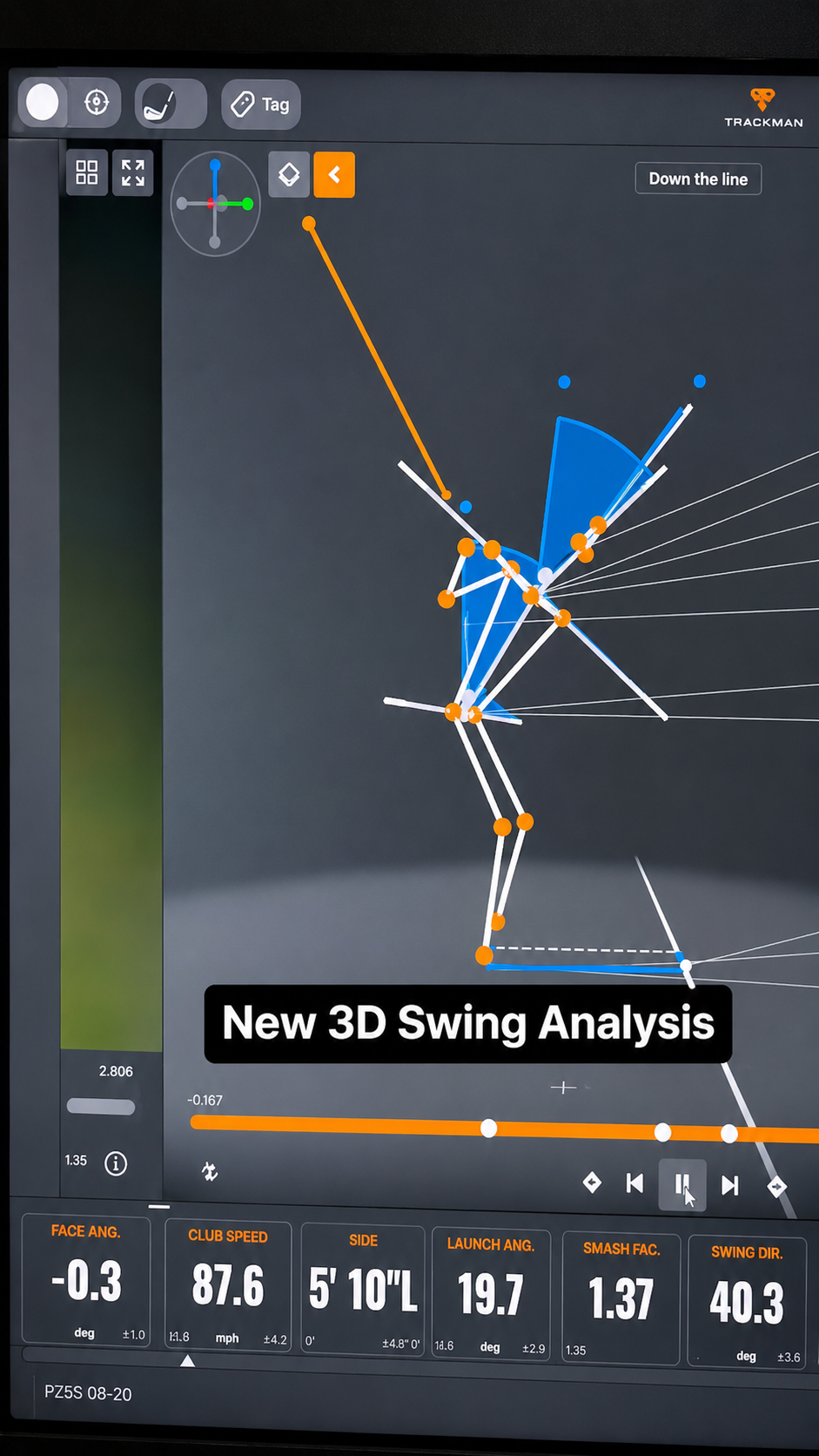
At My Golf Matters, driver lessons are built around accurate data and objective feedback. Using TrackMan technology and high-speed video, we can see exactly what’s happening at impact, how the clubface and club path are interacting, how efficiently the ball is being launched, and where improvements will have the biggest effect.
This approach allows us to correct driver issues properly, not temporarily. Rather than masking a slice or compensating for poor contact, the goal is to build a driver swing that produces predictable, repeatable results under pressure. That’s how golfers stop reloading on the tee and start trusting their swing.
The driver doesn’t need to be feared. When it’s understood properly, it becomes a weapon rather than a liability. If you’re tired of guessing, tired of searching for fixes, and tired of starting holes already on the back foot, structured, data-driven driver coaching is the most reliable way to move forward.
Fixing the driver once, properly, changes the entire game!


I read this text with great interest and found several useful insights. The information is presented clearly without unnecessary jargon. I found this text particularly useful for a project I am working on. It is an interesting resource for anyone wanting to understand this topic better.